
A recent study published by the Chinese Journal of Integrated Traditional and Western Medicine shows promise in the treatment of childhood autism. This study, which consisted of 55 patients between the ages of 2 and 7, evaluated the use of electro acupuncture (EA) as a treatment modality for ASD. Acupuncture treatment consisted of a transcutaneus electrical device placed on acupuncture points LI-11, LI-4, St 36 and LV 3. Patients received acupuncture twice a day for 12 to 24 months. Results were based on before and after SPECT scans evaluating changes in brain activity, as well as journals kept by parents to record changes in behavior.
Results based on recorded parental observations found that ‘the patients’ active language skills were increased, they exhibited increased attention to social stimuli, smiled more, looked at others more often and responded more to their own names’. Neuro imaging after electric acupuncture showed an improvement in defect areas within the prefrontal lobe, Broca’s area, temporal lobe, parietal lobe, hippocampus, visual cortex and thalamus. A correlation was seen between the level of change and the abatement of symptoms. The researchers noted that further studies are needed to confirm results, given the limited number of participants. In addition, with regard to observational data, the lack of blinding and likely parental desire for positive outcome will need to be addressed in further studies.
Zhao, Z., Jia, S., Hu, S., & Sun, W. (2013). Evaluating the effectiveness of electro-acupuncture as a treatment for childhood autism using single photon emission computed tomography. Chinese Journal of Integrative Medicine, 20(1), 19-23. doi:10.1007/s11655-014-1680-2

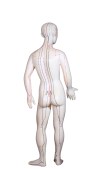 uitable staining agent (Trypan Blue) selective to the ducts. Bong Han Kim’s research was unable to be replicated due to his omission of this information. His original research simply mentioned the injection of a blue dye into an acupuncture point that he later observed to have circulated on a pathway similar to an acupuncture meridian.
 Traditional Chinese Medicine views neuropathy as the result of a deficiency and/or blockage leading to poor nourishment of the tissue. Treatment involves the use of acupuncture needles to stimulate and nourish blocked areas. Thin needles are often placed in acupuncture points near areas of numbness and pain as well as distally, based on the root cause of a patient’s neuropathy as seen from a Chinese Medical perspective. The treatment should be painless. Herbal medicine may also be prescribed to help alleviate pain and promote the flow of ‘qi’( or energy ) to the hands and feet. Patients often notice a difference after one treatment, though it will take repeat visits to sustain the relief.
 Dr. Amelie de Mahy L.Ac - Walnut Creek